
Evidence, Erasure, and Memory
The Woman in Cabin 10This thread explores the tension between Laura’s unstable access to proof and the deliberate acts that erase the traces of the crime.
increasing Bearing strength in each event
 decreasing
Bearing strength in each eventdecreasingA Fragmentary Witness

What Laura Remembers
Incomplete Perception
Laura hears a splash and sees a pale shape and a dark smear, but cannot identify a body or its killer.
The Limits of Certainty
The novel makes her uncertainty central: she knows something happened, but must reconstruct what from partial impressions.
A Physical Trace

The Mascara as Proof
A Borrowed Object
The mascara links Laura’s memory to a concrete interaction with the woman from Cabin 10 / Palmgren.
Vulnerability
Because it is ordinary and easily removed, the object proves how fragile evidence becomes when one person controls the room and its cleaning.
The Photograph Disappears

An Image Destroyed
Recognition
A photograph briefly supports Laura’s identification of the woman as someone present before the voyage.
Erasure
The damaged camera removes the image and demonstrates how a single destroyed device can undo a promising line of inquiry.
The Cover Story Holds

Paperwork Over Reality
A False Departure
Carrie uses Laura’s passport to make it appear that Laura has left the ship at Trondheim.
Administrative Erasure
The passenger record becomes a tool for hiding a living person, showing how official information can be manipulated to contradict physical reality.
Remains and Correction
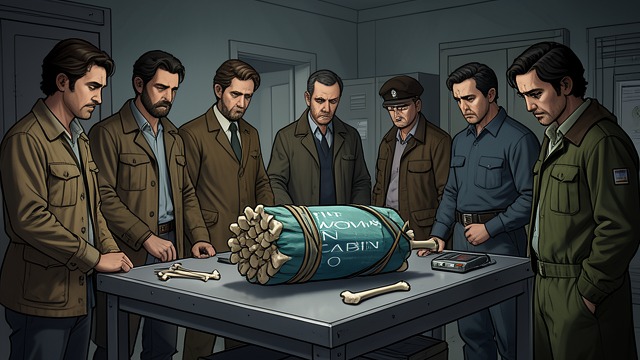
Evidence Returns
Identification
Authorities identify Anne’s recovered remains, correcting earlier rumors that Laura might be dead.
Imperfect Justice
The physical evidence establishes identity but leaves emotional and investigative questions unresolved for those who survived.
the night of the alleged murder
shortly after the report
after Laura’s discovery of the image
while Laura is hidden below deck
Thursday, November 26
